
A Bigger Runner on a GLP-1: My First Months on Zepbound

Quick Warning
This post talks about weight loss, related practices, and a product. If these are triggering for you in some way, please do not read this story — it isn’t worth it and I don’t want to cause you harm! And remember, I’m not a medical professional — none of this is medical advice, just my personal experience.
GLP-1s Everywhere
It seems impossible these days to listen to media at all, or to even exist around other people, without hearing about the latest weight loss medications, especially GLP-1s. For better or worse, that’s what you are going to hear about here as well. From my perspective, not all the stories you read seem like particularly healthy representations of weight loss medication usage. I hope this post will be the opposite. I’m going to outline for you my “normal person” perspective. Why it seems like the healthiest choice for me, concerns I had before starting, and how it’s going so far.
Why I Was Interested in Zepbound as a Bigger Runner
You can read a bit of my weight and athletic history over on my about page, but a brief summary is I’ve always been overweight or obese, save some short periods in my life. At the time I started on Zepbound, I was 240 pounds, having lost about 10–15 pounds through calorie restriction and careful nutrition tracking. That means I was solidly in the obese range. For my definition of healthy, I want to be at a lower weight — if you have a different definition for yourself, this site is still for you.
The CDC has an article covering the many long-term health risks associated with living in this category. The short of it is that obesity substantially impacts your lifespan and healthspan expectations. With two young kids, this weighed heavily on me. I want to be there as they grow older, to share their significant life events with them. The same is true thinking about my wife — we want to enjoy a retirement together, in health. The simple truth is being obese, for much of my life, would impact these desires — the science is pretty clear.
As it applies to this website, the other reality is that being obese, very simply, makes every aspect of running harder than it needs to be. Running is hard enough. Running carrying an extra 70+ pounds is even harder. I want to be clear — if you are overweight or obese and want to run, you definitely should. Hard doesn’t mean wrong and it certainly didn’t stop me. While I don’t have the science to back it up, I expect easy runs will feel easier, paces might become faster, and muscle and joint recovery may speed up. I would certainly like to up my weekly mileage, but at current paces, there’s a time constraint. I’m optimistic that weight loss will help my running.
What I Worried About Before Starting a GLP-1
I was not without reservations before deciding to start on Zepbound. I mulled over the following concerns for quite some time.
- Expensive: My employer’s health insurance does not cover weight loss medications and paying out of pocket is not inexpensive. Right now, at the starting dose, I’m paying $300 a month for the medication. That was a chunk of change I could spend on a ton of other things and it took me a while to decide it would be worth it. We are privileged enough as a family, though, that this is affordable for us — I realize not everyone can say the same. The simple math, for me, was that $300 a month to buy potentially years of healthy life, and perhaps make the years in between more enjoyable, is really not that much investment. When I picture my future self, I think I’d regret not spending this money in this way.
- Long-Term Effects: Given the history of weight loss medications, my immediate thought was that it must be too good to be true. Surely there will be long-term side effects discovered — I’ll wait it out until we know more. From my research, though, the reality is that GLP-1s have been in use for a while, just not for weight loss in particular. Therefore, we do have some understanding of the long-term side effects, which by my read, for me, are worth the risk. Especially true considering we do know the long-term side effects of remaining obese, as linked above, and they are unquestionably bad.
- On It For Life: Taking a weekly shot, at a cost of $300 a month, for the rest of my life, is not a particularly appealing prospect. While I don’t actually know how this will play out and perhaps I’m naive, I am hopeful that I will ultimately be able to eliminate the need for the medication. Once I reach my goal weight, I am optimistic that the combination of my already developed commitment to regular exercise, combined with new healthy eating habits, will allow me to maintain a healthy weight.
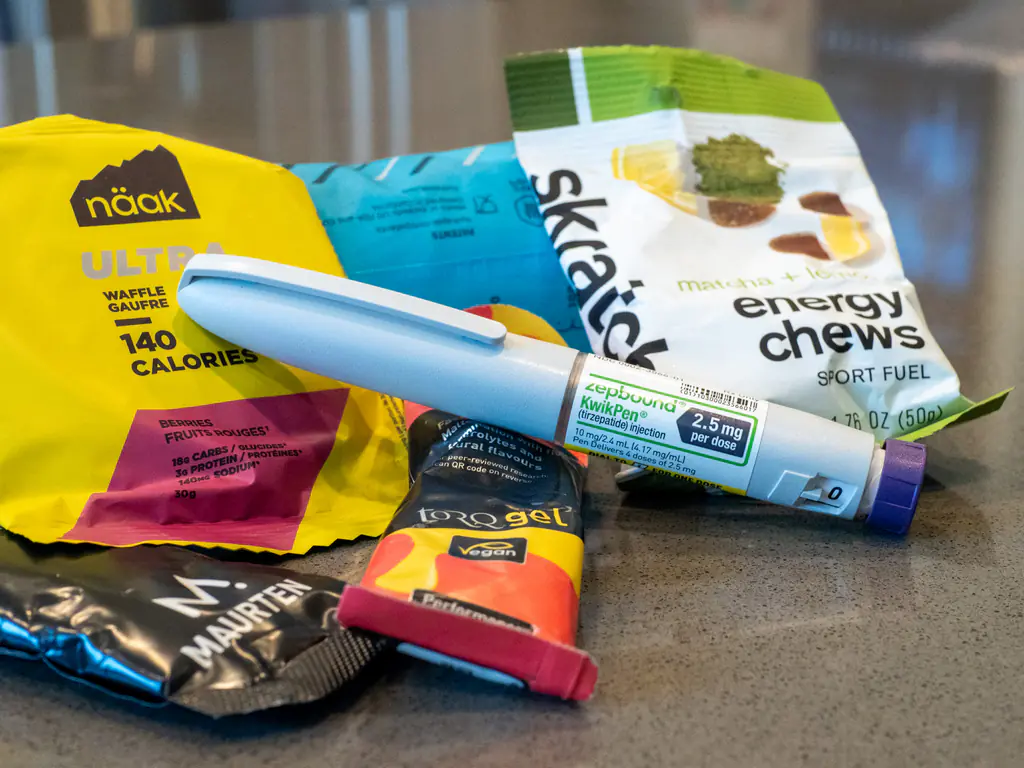
- Needles: Maybe a dumb one, but I don’t especially like needles or shots. I’m not fainting levels of fearful, but I’d avoid them if I could. I was not confident I could give myself a shot, let alone every week. I’m here to calm your fears. I ended up with the KwikPen, which is an easy-to-use, multi-dose device that takes tiny single-use needles — so small you can’t really even feel them.
- Feels Like Cheating: While it seems totally illogical, I suspect I’m not the only one to have felt like losing weight with a medication is cheating. Society has seemingly conditioned us to believe that weight loss requires hard effort. But if you stop and think about it… Why? I would rather meet my definition of healthy than worry about whether someone thinks I cheated to get there.
- Side Effects: Zepbound isn’t without side effects. While most are mild, there is risk with any new medication. There’s no way to know what you will experience without trying it.
- Training Impact: Listed last, but perhaps my biggest actual concern. I have been incredibly consistent with training for years now, including for half marathons. The reality is that maintaining that training, improving my running, requires sufficient nutrition. Would combining the (potentially aggressive) appetite suppression and reduced calorie intake from Zepbound impact my ability to train? Would I have to take a step back from training, to focus on weight loss? Would I lose fitness? In the end, I decided to take the risk and keep running as best my nutrition would allow.
I internally debated all the concerns above for a few months. Ultimately, the rebuttals outlined convinced me that the right decision for me was to try out the medication — if it could lead to sustained weight loss, the benefits outweighed any known drawbacks. Plus, it would be easy enough to just stop the medication if it turned out not to be effective.
After talking it over with my doctor, I decided to start on Zepbound.
Running on Zepbound: My First Months
I am entering my third month on Zepbound, as I write this post. I am still on the 2.5 mg dose and that is working for me. So far, I’ve been lucky in that I have had virtually no side effects. The most I’ve noticed is perhaps some slight nausea or lack of appetite the morning after I take my weekly dose.
What has been noticeable, which I’ve heard echoed elsewhere, is how it has changed my relationship with food. I generally just do not think about food, where previously it was a constant background thought — I suspect this is what others call “reduced food noise.” I can only see now, being on the medication, how constant this was previously. While I occasionally have cravings, they are not nearly as frequent or as severe as they were before starting the medication. Some cravings, I’ve decided, are worth trusting now. As an example, if I haven’t eaten much during the day and do a hard run, I start to crave something sweet — probably my body signaling it’s low on carbs relative to demands.
I am still monitoring my nutrition, using the MacroFactor app. These days, that monitoring is largely to try and ensure I’m getting proper macronutrients in during the day. It is relatively easy now to stay under my calorie goals, but it is much more challenging to hit proper macros (especially protein). I have to consciously consume more food, of the proper composition, to hit both my calorie and macronutrient goals.
At my 2.5 mg dose, I’m finding weight loss to be slow, but steady, which for me is the goal. I am not looking to rush through weight loss. I want to develop the habits, while maintaining sufficient nutrition for my training (or at least as close as I can get). I have been consistently losing between 0.75–1.5 pounds per week.
Impact on Training
So far, the appetite suppression and reduction in calories haven’t hurt my training. Specifically:
- I am still hitting my target paces on my weekly workouts.
- Regular weight lifting is still resulting in increased strength and bigger lifts. I have committed to more focused strength training — four days per week with heavy weights — and protein intake, to hold onto muscle during weight loss.
- I have not noticed substantially reduced energy or inability to recover.
- I am still able to fuel my long runs. This was a specific item I was worried about — getting calories in on long runs. Thus far, my appetite hasn’t been suppressed enough to keep me from fueling mid-run.
While it is impossible to say how my gains compare to what could have been, without the GLP-1, I at least do not feel like it has slowed relative to before I started. I’m still seeing improvements while losing weight, which is everything I want.
What I’m Hoping Weight Loss Does for My Running and Life
While I’ve barely started this journey, I am already thinking about the future I am hoping it will create for me. At current weight loss trends, I imagine I will hit my goal weight a year to a year and a half from now. In addition to the general health improvements, I’m optimistic running will get easier — less load on the muscles, faster paces, higher mileage, longer runs. These are things I want to do, not something I believe every runner needs to do, but things I hope weight loss assists. Beyond running, I am hoping to do bigger adventures — in particular, I want to go on some longer backpacking trips with my brother. While we’ve done a few trips before, I’ve always struggled a bit and felt my body was over-stressed, probably from hauling the extra weight around. Finally, I ultimately hope to get off Zepbound. While it seems like some folks struggle with this and weight regain is a real possibility, I’m optimistic I can build the nutrition habits to pair with my exercise habits, meaning I’ll be able to keep it off. There is some truth to the fact that I’d rather not spend $300 a month in perpetuity. However, if push comes to shove and I need to do so, given experiences so far, I probably would.
What This Means for a Blog About Bigger Runners
There’s a bit of an elephant in the room with this topic, as it relates to the blog. Specifically, the niche of this site, at present, is to provide the perspective of a bigger, non-stereotypically shaped runner. If I lose a bunch of weight, what are the implications? The honest answer is that I won’t be able to assess products from the same vantage point. My head will stay the same size (gigantic), my feet will remain as they are (high volume and wide), so that perspective will persist. If I’m at a healthier weight, I may still be on the bigger side (compared to many runners), but it won’t be the heavier perspective, pushing the boundaries of size charts and midsole foams. That is a tradeoff I have decided I’m willing to make, for my health. Hopefully the site will remain useful, as I continue to post general reviews with an eye on size charts. Perhaps I can even recruit others to add reviews with a different angle. For the time being, I’m still providing the perspective I set out to provide.
Unable to load comments. View on Bluesky

Join the conversation onBluesky